The 2027 Ford Explorer fits 7 passengers and carries up to 85.8 cubic feet of cargo, more than the 5-seat Grand Cherokee’s 70.8 cu ft. The Explorer also adds a 5G modem, Google-native navigation, and BlueCruise hands-free highway assist as available features. This page breaks down every key number side by side so you can see exactly which SUV fits your life, with inventory links to Canton Ford.
The 2027 Explorer wins for buyers who need a third row, maximum cargo room, or a tech-forward cabin with Google-native integration. The 2027 Grand Cherokee wins for buyers who want more raw towing capacity, higher output from its base engine, or serious off-road capability through the Trailhawk trim. Both carry identical basic and powertrain warranties, so ownership costs start from an even footing.
| Specification | 2027 Ford Explorer | 2027 Jeep Grand Cherokee |
|---|---|---|
| Base Engine | 2.3L EcoBoost I-4 Turbo | 3.6L Pentastar V6 / 2.0L Hurricane Turbo-4 |
| Horsepower | 300 hp | 293 hp (V6) / 324 hp (Turbo-4) |
| Torque | 310 lb-ft | 260 lb-ft (V6) / 332 lb-ft (Turbo-4) |
| Transmission | 10-speed automatic | 8-speed automatic |
| Drivetrain | RWD standard / AWD optional | RWD standard / 4WD optional or standard |
| EPA Combined MPG | 24 mpg | 22 mpg (V6) / 23 mpg (Turbo-4) |
| Seating | 7 | 5 |
| Cargo Behind Last Row | 16.3 cu ft | 37.7 cu ft (behind 2nd row, no 3rd row) |
| Max Cargo | 85.8 cu ft | 70.8 cu ft |
| Towing Capacity | 5,000 lbs | 6,200 lbs |
| Ground Clearance | 7.6 in (Tremor: 8.7 in) | 8.4 in (Trailhawk air: 11.4 in) |
| Length | 198.7 in | 193.5 in |
| Basic Warranty | 3 yr / 36,000 mi | 3 yr / 36,000 mi |
| Powertrain Warranty | 5 yr / 60,000 mi | 5 yr / 60,000 mi |
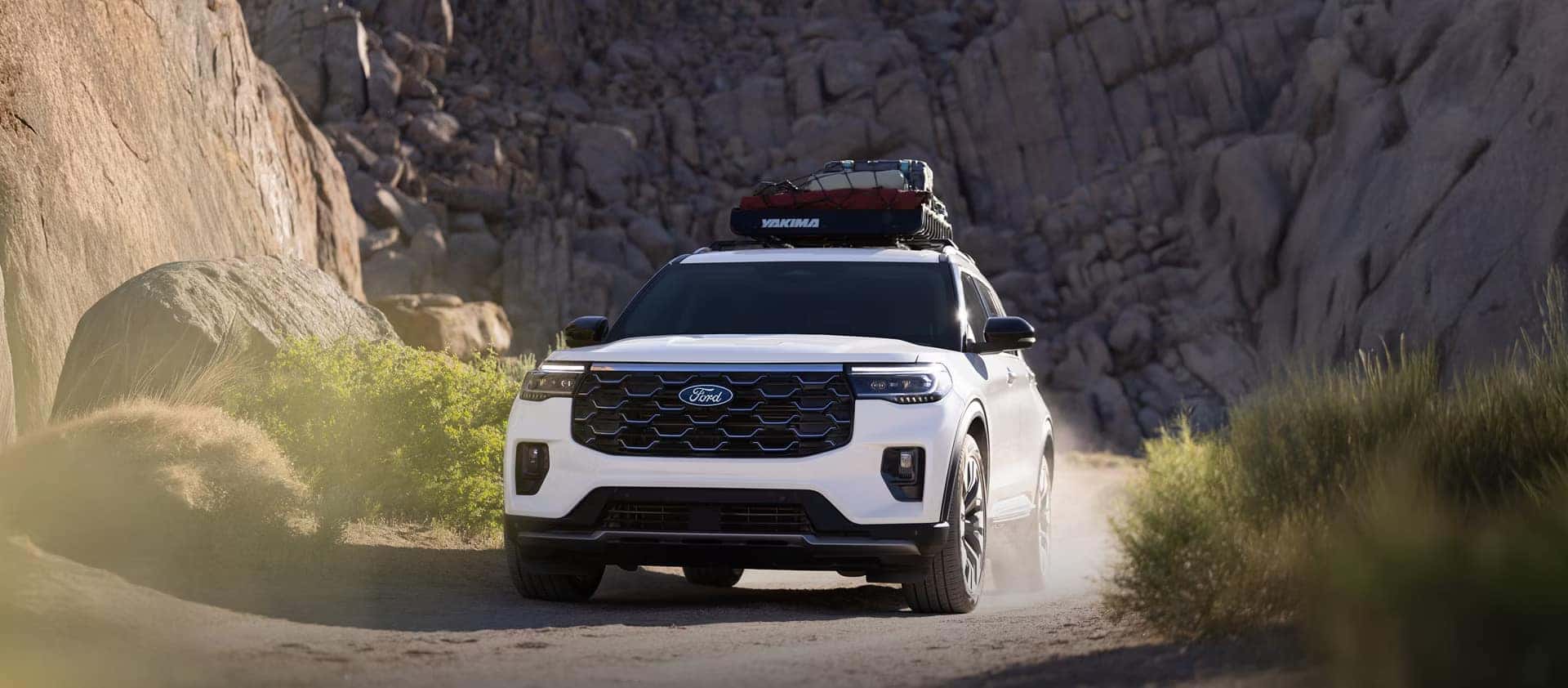
The Explorer’s standard 2.3L EcoBoost four-cylinder produces 300 hp and 310 lb-ft of torque, routed through a 10-speed automatic. Buyers who want more muscle can step into the ST trim, which carries the 3.0L twin-turbo EcoBoost V6 producing up to 400 hp in federal-market configuration. That engine is also available on the Tremor and Platinum trims.
The Grand Cherokee uses two separate base engines depending on trim. The Laredo and Laredo X carry the 3.6L Pentastar V6, rated at 293 hp and 260 lb-ft. The Laredo Altitude and above receive the 2.0L Hurricane Turbo-4, which produces 324 hp and 332 lb-ft of torque and runs on regular 87-octane fuel.
The Explorer requires premium fuel for its rated output.
The Explorer’s 10-speed gearbox has two additional ratios compared to the Grand Cherokee’s 8-speed, which gives Ford’s transmission tighter spread across the rev range. On the towing side, the Grand Cherokee holds a clear advantage at 6,200 lbs versus the Explorer’s 5,000 lbs maximum.
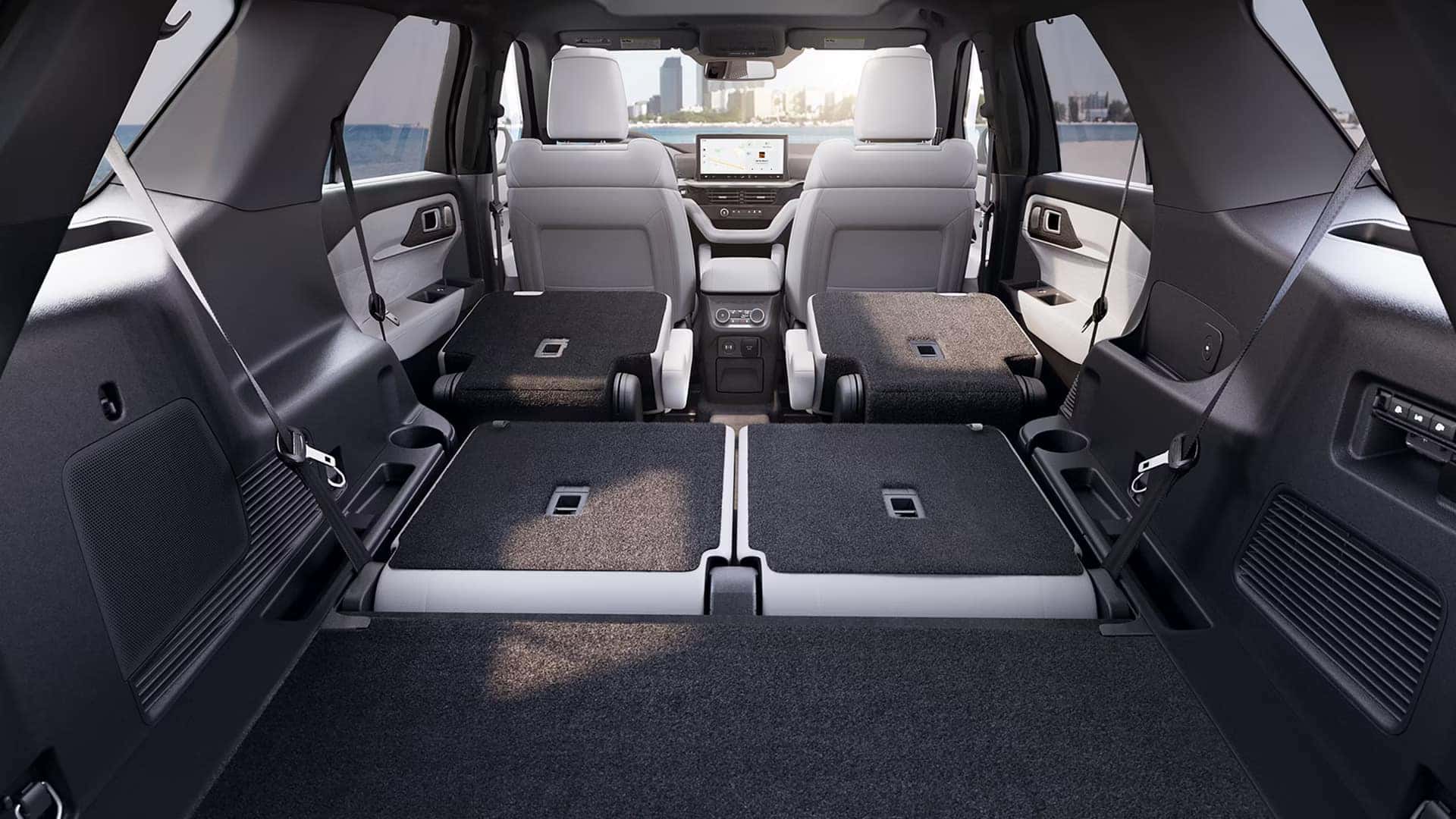
This is where the two vehicles serve fundamentally different needs. The Explorer is a three-row SUV with seating for 7 and a total cargo volume of 85.8 cubic feet with all rows folded. A family of five or more traveling with gear will find the Explorer’s layout far more practical.
The 46 cubic feet behind the second row covers most everyday load needs, and 16.3 cubic feet behind the third row still fits a week’s worth of bags.
The Grand Cherokee is a two-row, five-seat SUV. Without a third row, it offers 37.7 cubic feet behind the rear seats, which is more usable on a per-row basis, but the total maximum volume of 70.8 cubic feet is roughly 17 percent smaller than the Explorer’s ceiling.
Interior dimensions favor the Explorer for headroom in all positions. The Explorer’s cabin measures 40.7 inches of first-row headroom and 38.9 inches in the third row, giving rear passengers a genuinely usable space rather than a tight occasional seat.
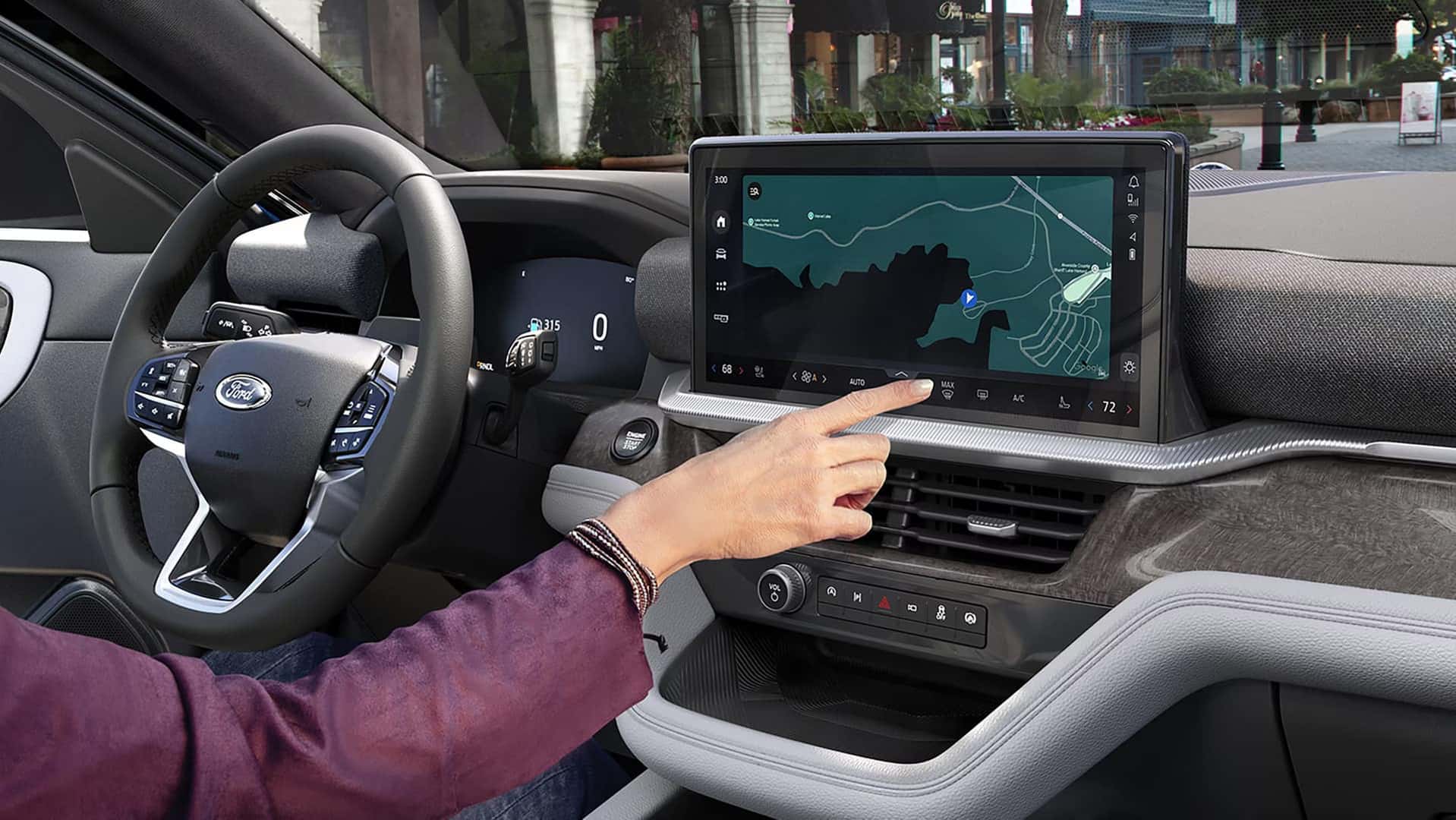
Both vehicles carry wireless Apple CarPlay and Android Auto as standard features. The Explorer raises the bar with a 13.2-inch center touchscreen and a 12.3-inch digital instrument cluster, Google Maps native navigation, Google Assistant voice controls, and a 5G modem that connects up to 10 devices within 50 feet.
BlueCruise hands-free highway driving assist is available on ST-Line and Tremor trims. The Ford Connectivity Package, included for one year, adds streaming, games, and karaoke while parked.
The Grand Cherokee starts most trims with a 10.1-inch touchscreen and a 10.3-inch digital instrument panel. The Laredo Altitude and above gain a 12.3-inch Uconnect 5 touchscreen. Surround-view camera access requires the Limited Reserve trim or above, whereas the Explorer includes the 360-degree surround-view camera system as standard on the ST-Line and above. The Grand Cherokee Summit adds a 19-speaker McIntosh audio system and an optional Hands-Free Active Driving Assist system.
On safety, the Explorer’s Ford Co-Pilot360 suite is standard across all trims, covering adaptive cruise control, forward collision warning with automatic braking, lane centering, intersection collision mitigation, blind-spot warning, and rear cross-traffic warning with automatic braking. The Grand Cherokee also ships with adaptive cruise control and automatic emergency braking as standard, along with rear parking sensors that the Explorer does not list as standard.
Both vehicles share identical warranty coverage: 3 years or 36,000 miles basic, and 5 years or 60,000 miles on the powertrain. Neither has an ownership cost advantage at the warranty level.
The Explorer earns a 24 combined mpg EPA rating, ahead of the Grand Cherokee’s 23 mpg with the Hurricane Turbo-4 and 22 mpg with the V6. Over time, that 1-2 mpg difference adds up for high-mileage drivers. The Grand Cherokee uses regular 87-octane fuel on both engines, while the Explorer specifies premium fuel for its rated power figures, which partially offsets the fuel economy edge.
The Explorer’s five-trim lineup (Active, ST-Line, Tremor, ST, Platinum) gives buyers a broad range of configurations from a family entry point to an off-road-capable Tremor or a performance-oriented ST. The Grand Cherokee’s ten-trim lineup is wider, spanning Laredo through Summit with optional Trailhawk and Overland trims that bring legitimate trail hardware including Quadra-Lift air suspension and up to 11.4 inches of ground clearance.
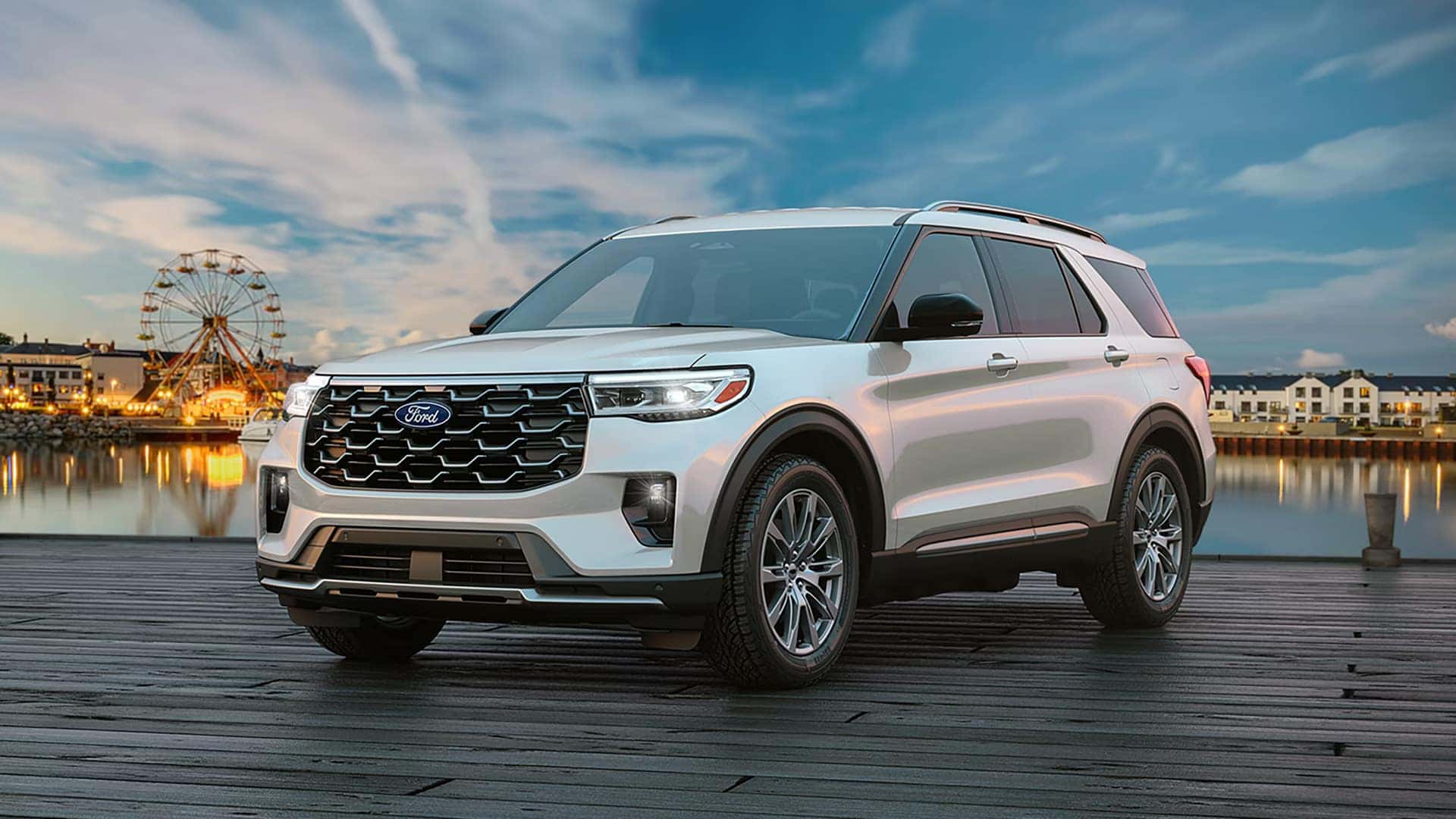
You need seating for more than five people, want the largest total cargo volume in this comparison, prioritize Google-native navigation and 5G connectivity from a lower trim level, or want available BlueCruise hands-free highway driving without moving to the top of the lineup.
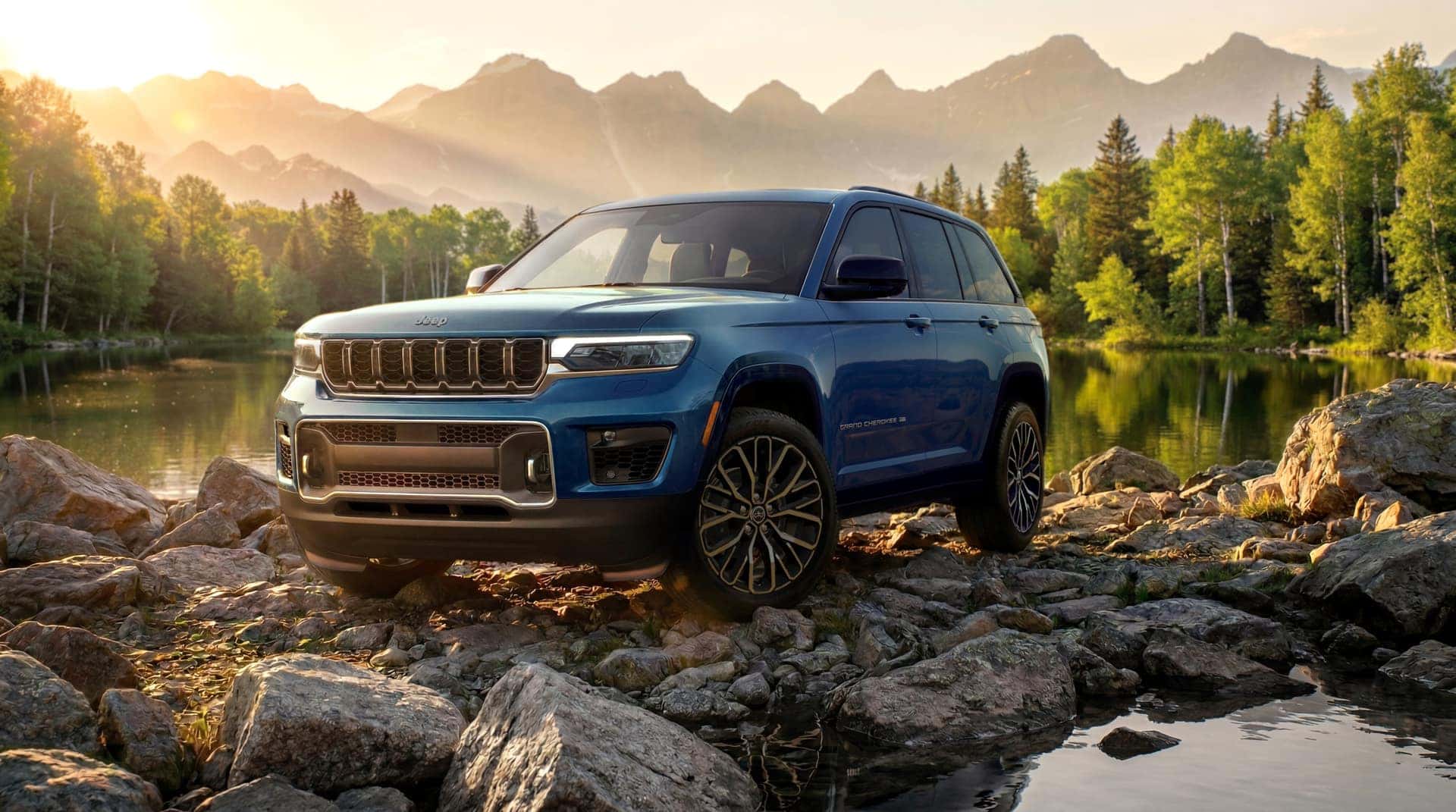
You only need five seats, prioritize towing capacity (6,200 lbs beats the Explorer’s 5,000 lbs ceiling), want the most aggressive off-road capability in the segment through the Trailhawk with air suspension and 11.4 inches of ground clearance, or prefer a wider trim selection to fine-tune your budget and features.
Shoppers in Canton and the surrounding East Texas area who need to haul the whole family will consistently land on the Explorer’s third row as the tiebreaker. Those who tow regularly or spend time off pavement will find the Grand Cherokee’s numbers harder to ignore.
Canton Ford carries new Explorer inventory across the Active, ST-Line, Tremor, ST, and Platinum trims. Test driving both SUVs back to back is the fastest way to confirm which layout fits your family. The Explorer’s third row and 85.8 cubic feet of cargo room speak for themselves in person. Stop by Canton Ford or browse current inventory online to find your trim, color, and configuration.
Yes. The Explorer offers 85.8 cubic feet of maximum cargo space versus 70.8 cubic feet in the Grand Cherokee. The Grand Cherokee is a two-row SUV, so it lacks a third row entirely.
The Explorer is rated at 24 combined mpg. The Grand Cherokee earns 23 combined with the Hurricane Turbo-4 engine and 22 combined with the V6, so the Explorer is the more efficient choice by 1-2 mpg combined.
No. The Explorer tows up to 5,000 lbs and the Grand Cherokee tows up to 6,200 lbs. If towing capacity is your primary concern, the Grand Cherokee holds the advantage.
Yes. BlueCruise hands-free highway driving assist is available on the ST-Line and Tremor trims of the 2027 Explorer.
The Explorer seats 7 across three rows. The Grand Cherokee seats 5 across two rows. A separate Grand Cherokee L three-row model exists, but that is a different vehicle not compared here.
The Grand Cherokee uses the Uconnect 5 system with its own navigation. Google Maps is native to the Explorer’s infotainment system via Google built-in. The Grand Cherokee does not list Google Maps native integration in its verified specs.
The 2027 Explorer Tremor comes standard with all-wheel drive and offers 8.7 inches of ground clearance, making it the Explorer’s dedicated off-road trim. The Grand Cherokee Trailhawk goes further with air suspension reaching up to 11.4 inches of ground clearance when properly equipped.