The 2027 Ford Explorer gets 24 MPG combined, beating the Traverse’s 22 MPG combined on the base engine. The Explorer adds a rear-wheel-drive platform and available 400-hp V6, while the Traverse tops out at 328 hp. This page breaks down every major spec difference and points you to current Explorer inventory at Canton Ford.
Buyers who want efficiency, a performance-oriented platform, and an available high-output V6 will find the Explorer the stronger choice. Buyers who want maximum cargo room behind the third row (22.9 cu ft vs 16.3) and an 8-passenger option should take a harder look at the Traverse. Both share the same powertrain warranty length, but the Explorer’s fuel economy edge and rear-wheel-drive foundation set it apart as the more driver-focused pick.
| Specification | 2027 Ford Explorer | 2027 Chevrolet Traverse |
|---|---|---|
| Base Engine | 2.3L EcoBoost I-4 Turbo | 2.5L DOHC Turbo I-4 |
| Base Horsepower | 300 hp | 328 hp |
| Base Torque | 310 lb-ft | 326 lb-ft |
| Optional Engine | 3.0L Twin-Turbo V6 | N/A |
| Optional Horsepower | Up to 400 hp | N/A |
| Transmission | 10-speed automatic | 8-speed automatic |
| Standard Drivetrain | Rear-wheel drive | Front-wheel drive |
| AWD | Optional / Standard on Tremor | Optional on LT, RS, High Country; Standard on Z71 |
| EPA Combined MPG | 24 MPG | 22 MPG (FWD) / 21 MPG (AWD) |
| Seating Capacity | Up to 7 (6 on Tremor) | Up to 8 (7 standard) |
| Cargo Behind 3rd Row | 16.3 cu ft | 22.9 cu ft |
| Max Cargo | 85.8 cu ft | 98 cu ft |
| Towing Capacity | 5,000 lbs | 5,000 lbs |
| Base Curb Weight | 4,248 lbs | 4,504 lbs (FWD) |
| Overall Length | 198.7 in | 204.49 in |
| Min Ground Clearance | 7.6 in (Active) / 8.7 in (Tremor) | 6.77 in (FWD/AWD) / 7.76 in (Z71) |
| Touchscreen | 13.2 in | 17.7 in |
| Digital Cluster | 12.3 in | 11 in |
| Basic Warranty | 3 yr / 36k mi | 3 yr / 36k mi |
| Powertrain Warranty | 5 yr / 60k mi | 5 yr / 60k mi |
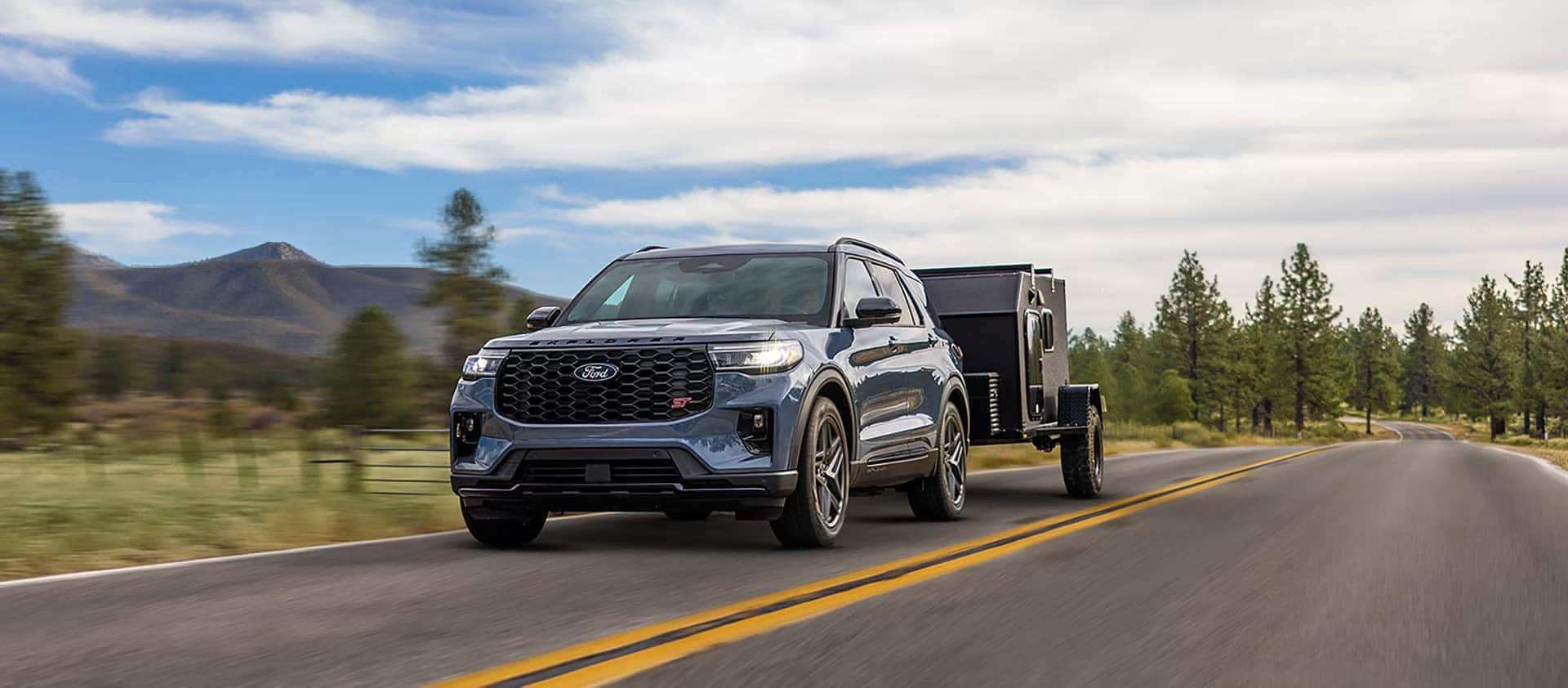
The Explorer’s 300-hp EcoBoost four-cylinder starts with 10 gears to work with, which keeps the engine in its efficiency range more often than the Traverse’s 8-speed pairing. The Traverse counters with 328 hp and 326 lb-ft of torque from its base engine, so it carries a measurable output advantage at the base level.
Where the Explorer separates itself is the ST and the Platinum’s available 3.0L twin-turbocharged V6. In federal-state tune, that engine produces 400 hp and 415 lb-ft of torque. No Traverse trim offers anything close to those figures. The Traverse has no optional engine upgrade at all.
The Explorer’s rear-wheel-drive base also gives it a fundamentally different driving character. RWD improves straight-line balance and allows for more natural weight distribution, which drivers tend to feel in cornering response. The Traverse is front-wheel-drive by default across most trims, with AWD available on LT, RS, and High Country. The Z71 makes AWD standard and adds Hill Descent Control for buyers who want light off-road capability, while the Explorer’s Tremor trim offers 8.7 inches of ground clearance and standard AWD for a similar buyer. Both vehicles tow up to 5,000 lbs.
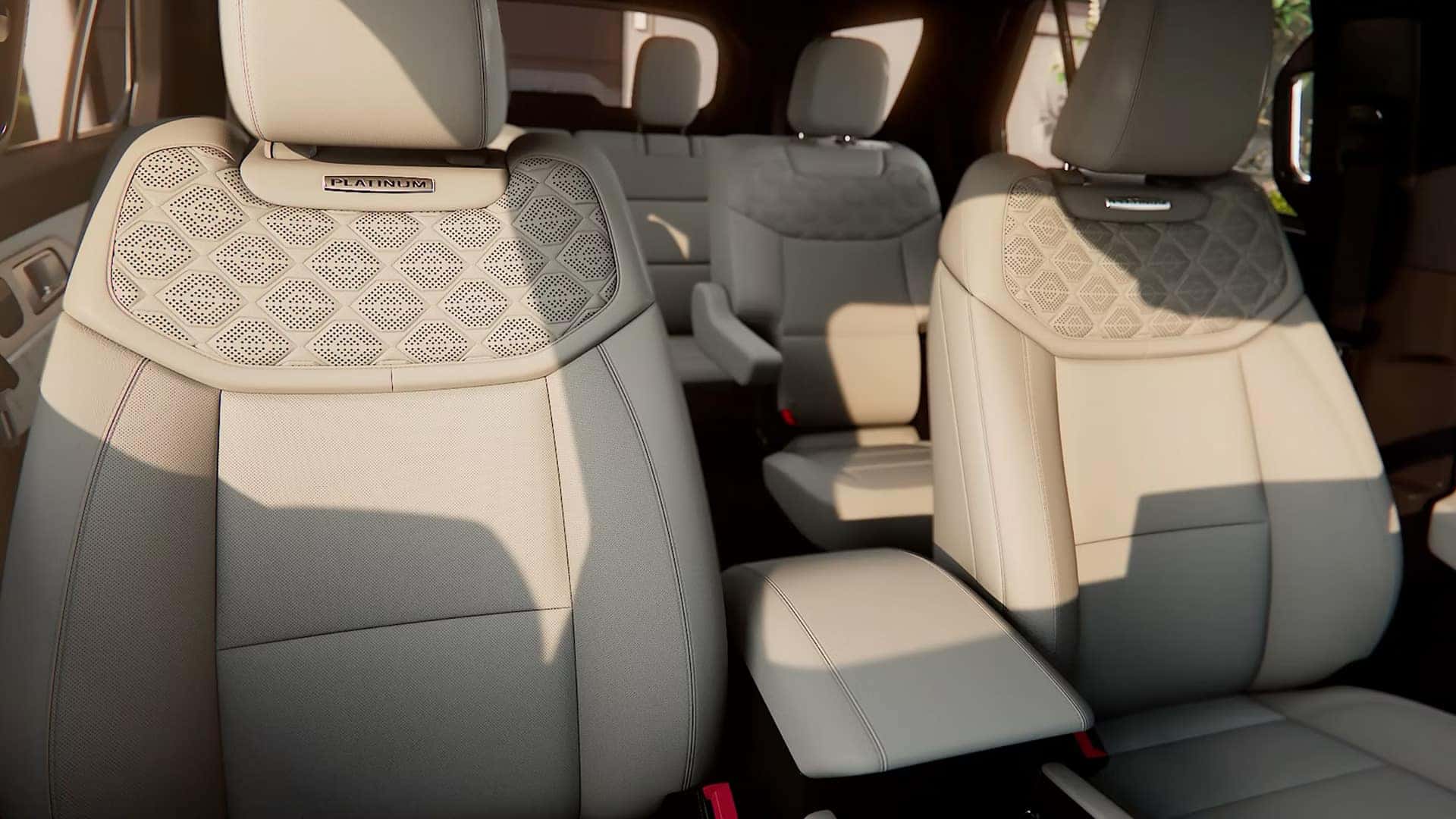
The Traverse carries a measurable interior packaging advantage. At 204.49 inches long (vs 198.7 for the Explorer), it converts that extra length into usable cargo space. Behind the third row, the Traverse holds 22.9 cu ft to the Explorer’s 16.3 cu ft. Maximum cargo with all rows folded reaches 98 cu ft in the Traverse compared to 85.8 cu ft in the Explorer.
Second-row leg room also favors the Traverse at 41.46 inches versus 37.5 inches in the Explorer. Third-row leg room is nearly equal (32.13 in for Traverse, 31.8 in for Explorer).
The Explorer does hold one interior advantage: its 13.2-inch touchscreen is sizable, and its digital instrument cluster runs 12.3 inches. The Traverse counters with a class-notable 17.7-inch diagonal display, though its cluster is a narrower 11 inches.
Seating capacity is the same (7 standard on most trims for both). The Traverse LT adds an 8-passenger bench option, which the Explorer does not match. The Explorer Tremor is capped at 6 occupants.
For families who prioritize cargo room and passenger count, the Traverse’s size works in its favor. For families who prioritize driver engagement and efficiency, the Explorer’s layout is more than sufficient.
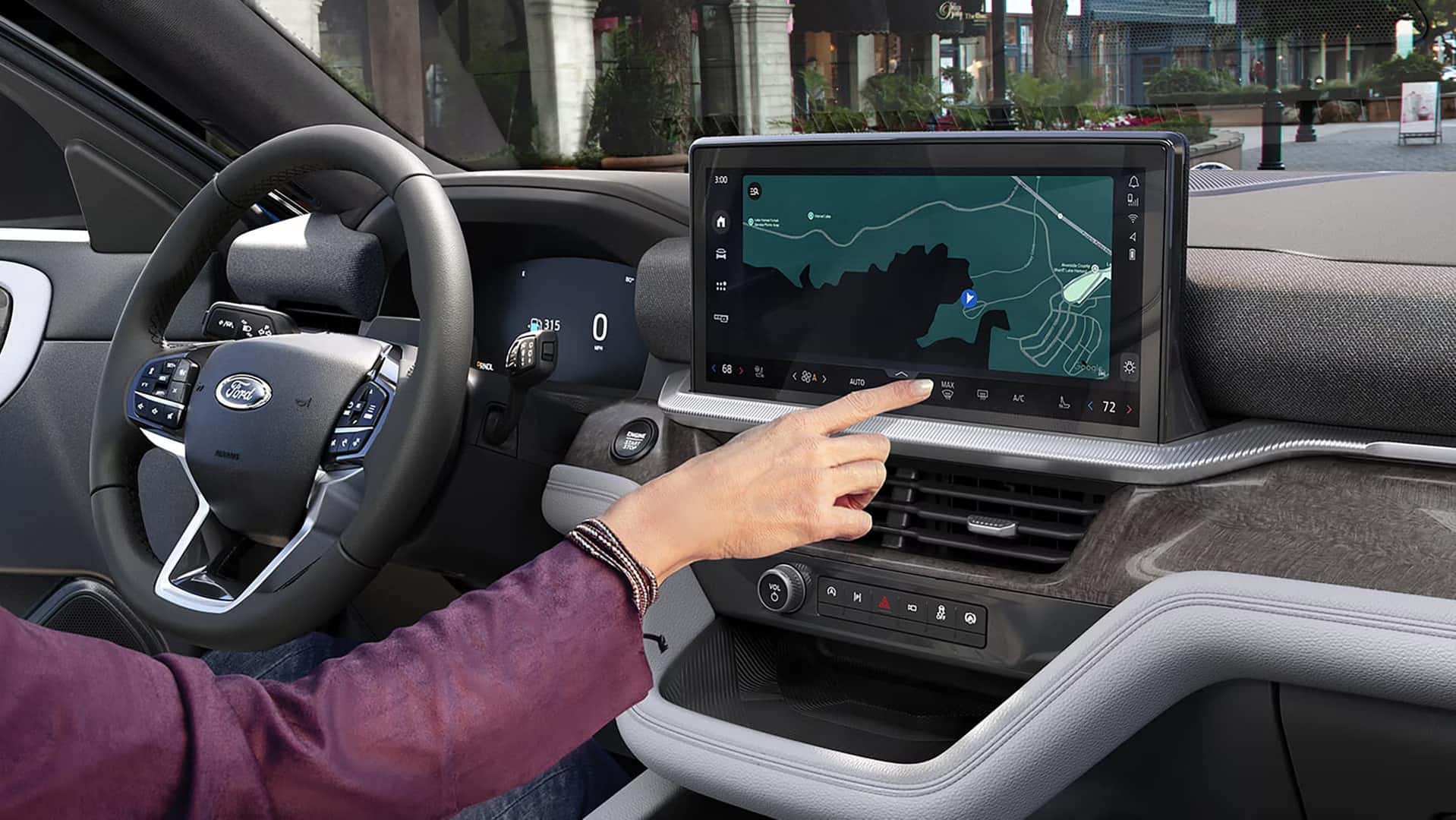
Both vehicles run Google Built-In with Google Maps and voice control, wireless Apple CarPlay and Android Auto, and a built-in Wi-Fi hotspot. The Traverse adds SiriusXM with 360L as standard and wireless device charging across the lineup. The Explorer includes the Bang and Olufsen audio system as an available upgrade (10-speaker standard or 14-speaker 980W system), and it offers Google Assistant voice control through Ford’s native integration.
Hands-free driving assist is available on both. Ford’s BlueCruise is available on Explorer ST-Line and Tremor trims. GM’s Super Cruise is standard on the Traverse RS (FWD and AWD) and High Country, and available on LT and Z71. Both systems require attention monitoring hardware and work on mapped highways.
On the safety side, both vehicles carry a thorough standard suite. The Explorer includes Ford Co-Pilot360 with forward collision warning and automatic braking, adaptive cruise control, lane centering, blind-spot warning, rear cross-traffic warning with automatic braking, and intersection collision mitigation. The Traverse’s Chevy Safety Assist package covers forward collision alert with automatic emergency braking and pedestrian detection, blind-spot warning, rear cross-traffic alert with intervention, lane keeping assistance, adaptive cruise control, and rear pedestrian alert. The Traverse also includes a 360-degree camera system as standard across all trims. The Explorer’s surround-view system is standard on ST-Line and above.
Both vehicles carry identical warranty lengths: 3 years / 36,000 miles for basic coverage and 5 years / 60,000 miles for powertrain. Neither holds a significant advantage on paper warranty terms.
The Explorer’s fuel economy edge matters over ownership time. At 24 MPG combined versus 22 MPG combined (FWD Traverse) or 21 MPG combined (AWD Traverse), Explorer owners will spend less at the pump over 36,000 miles of driving. For a driver covering 15,000 miles per year, that gap compounds meaningfully across a five-year ownership window.
The Traverse starts with more standard premium content on higher trims, including heated rear seats, ventilated front seats, and a Bose audio system on RS and High Country. The Explorer spreads premium content across its Platinum and ST trims, with the ST delivering the 400-hp engine as standard equipment.
Both offer standard content that includes wireless phone connectivity, a power liftgate, tri-zone climate control, and driver-assist safety packages. Neither vehicle requires a substantial upgrade to reach a comfortable daily-driver configuration.

You want better combined fuel economy, a rear-wheel-drive platform, or the option to step up to a 400-hp twin-turbocharged V6. The Explorer Tremor suits drivers near Canton, TX who want light off-road capability with 8.7 inches of ground clearance and standard AWD. The Explorer ST is the right call for anyone who wants a family three-row SUV with genuine performance credentials.
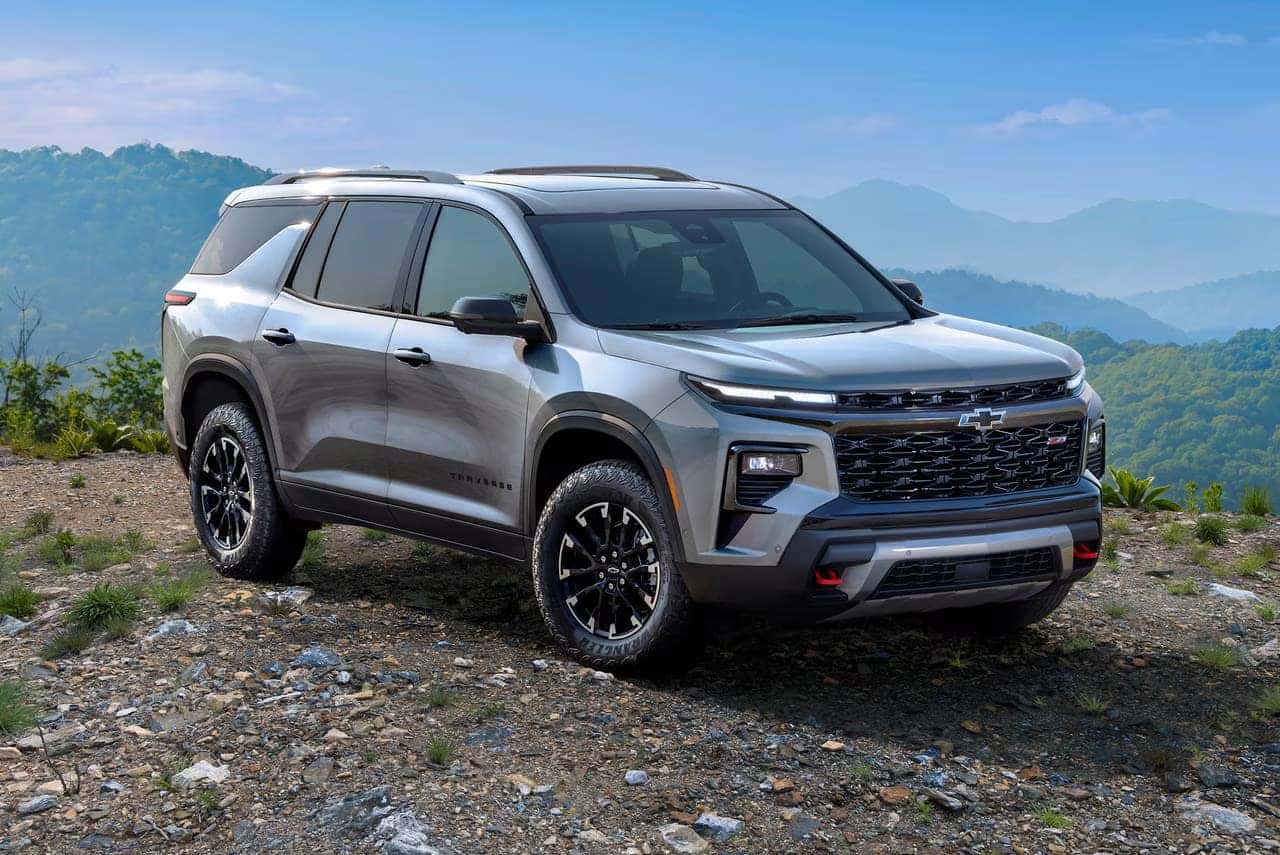
You need every cubic inch of cargo room, want an 8-passenger seating option, or prefer a wider base-engine output (328 hp vs 300 hp). The Traverse Z71 offers Hill Descent Control for buyers who prioritize trail-ready features. Its 17.7-inch touchscreen is the largest display in this segment and appeals to buyers who prioritize in-cabin tech visibility.
For most buyers cross-shopping these two at Canton Ford, the Explorer’s efficiency advantage, performance ceiling, and RWD-based driving feel make it the more satisfying long-term choice. The Traverse is the better pick when raw cargo volume and maximum seating count are non-negotiable.
Canton Ford stocks the 2027 Explorer across trims, from the Active to the ST. If you are weighing the Traverse against the Explorer, a back-to-back test drive will answer the questions no spec sheet can. Visit Canton Ford, serving drivers across Canton and the surrounding area, to put both numbers into real-world context.
Yes. The 2027 Explorer earns 24 MPG combined, while the Traverse earns 22 MPG combined on FWD trims and 21 MPG combined on AWD trims.
The Traverse has significantly more cargo room. It offers 22.9 cu ft behind the third row and 98 cu ft maximum, versus 16.3 cu ft behind the third row and 85.8 cu ft maximum in the Explorer.
Yes. The Explorer uses a rear-wheel-drive platform as the standard drivetrain, with all-wheel drive available. The Tremor trim comes with AWD standard.
Both vehicles are rated at 5,000 lbs maximum towing capacity.
Both offer hands-free highway driving. The Explorer offers BlueCruise on ST-Line and Tremor trims. The Traverse offers GM’s Super Cruise, which is standard on RS and High Country trims and available on LT and Z71.
Yes. The 3.0L twin-turbocharged V6 is standard on the Explorer ST and available on Tremor and Platinum. It produces 400 hp and 415 lb-ft of torque on federal-state vehicles. The Traverse offers no optional engine upgrade.
Both the Explorer and Traverse carry a 3-year / 36,000-mile basic warranty and a 5-year / 60,000-mile powertrain warranty. Coverage lengths are equal.
Canton Ford, located in Canton, TX, carries the 2027 Explorer. Browse inventory online to see current stock, or contact Canton Ford to schedule a test drive.