The 2027 Ford Explorer delivers up to 85.8 cubic feet of cargo space with seating for seven people. That beats the prior Explorer generation’s cargo flexibility and adds a more usable third row for real passengers. This page covers how the space works across every trim, plus inventory is available at Canton Ford.
The 2027 Explorer is built around a rear-wheel-drive platform that Ford specifically chose to free up interior packaging room. The result is a cabin that seats up to seven people across three rows while still offering three distinct cargo configurations. Behind the third row you have 16.3 cubic feet, which is enough for a week’s worth of grocery bags or a set of carry-on bags. Fold the second row and that jumps to 46 cubic feet. Fold everything flat and you reach the full 85.8 cubic feet, which puts the Explorer in the same conversation as larger three-row SUVs.
Third-row head room measures 38.9 inches, and third-row leg room comes in at 31.8 inches. Those numbers are not just adequate for children on a short errand. Adult passengers on a trip from Canton to Dallas or Tyler will find them genuinely workable for an hour or two. Hip room in the third row is 40.9 inches, and shoulder room reaches 54.6 inches, which means two adults can sit side by side without constant contact.
The Explorer’s three-row layout uses a 60/40 split second row and a split third row, which lets you mix passenger and cargo needs without committing to one extreme. Need two third-row seats but still want to bring a bicycle? Leave one third-row section up and fold the other.
On select trims, Ford offers available PowerFold third-row seats, which collapse at the touch of a button rather than requiring manual effort. That matters on a parking-lot grocery run when your hands are full.
The power liftgate opens and closes from the key fob, so you can have the cargo area ready before you reach the vehicle. ST and Platinum models add an Open On Approach liftgate that reads your fob as you walk up, with that feature also available on the Tremor.
The cargo area includes a power point at the rear, so a portable cooler or a device charger does not require running a cord to the front of the cabin. The load floor is flat when the second and third rows are folded, which simplifies loading furniture, sporting gear, or anything that benefits from a flat surface.
The Explorer is offered in Active, ST-Line, Tremor, Platinum, and ST trims. Here is how interior space features break down across that lineup:
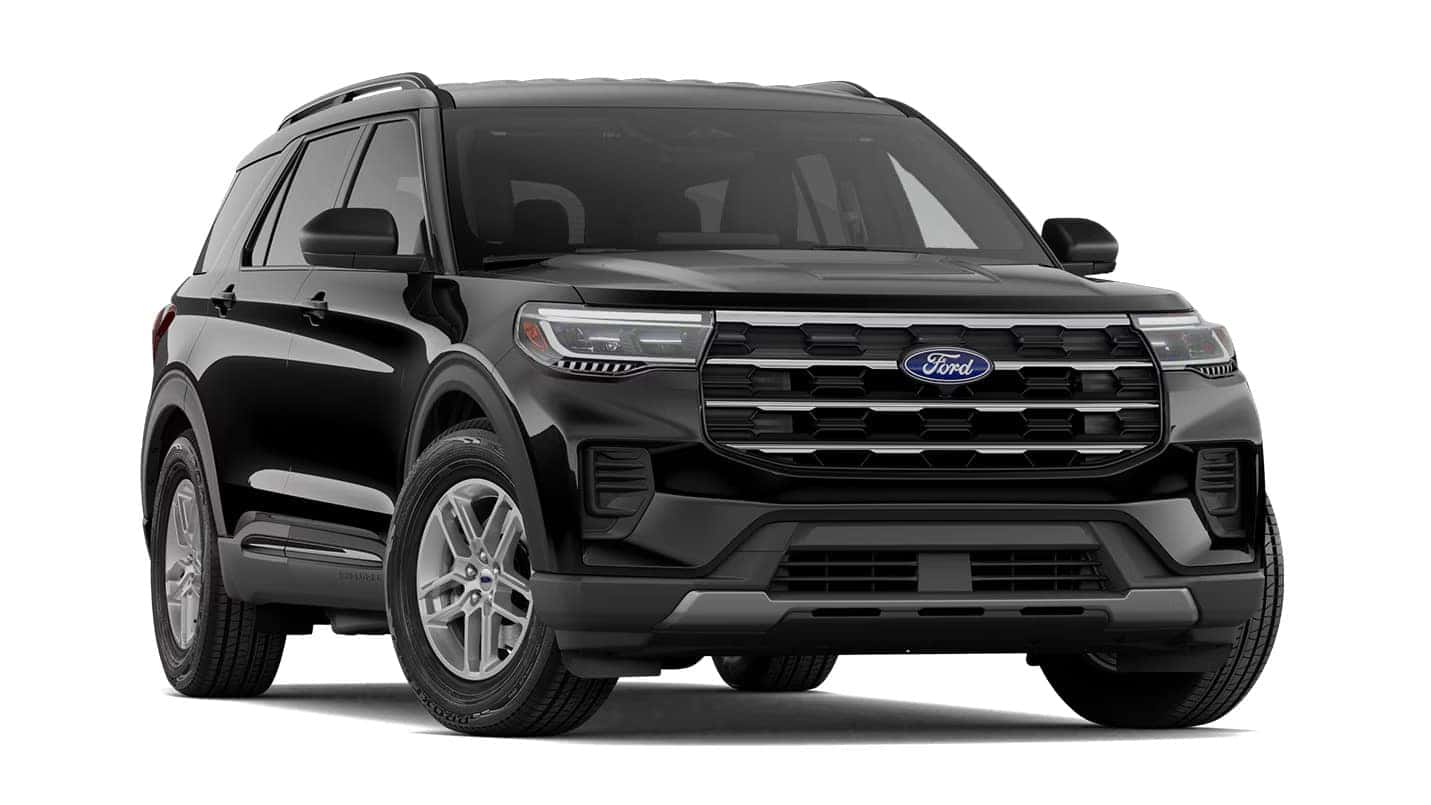
Standard cloth seating for up to seven. Manual third-row access. The Active Comfort Package adds ActiveX seating material and second-row climate controls, which improves the experience for row-two passengers on longer drives.
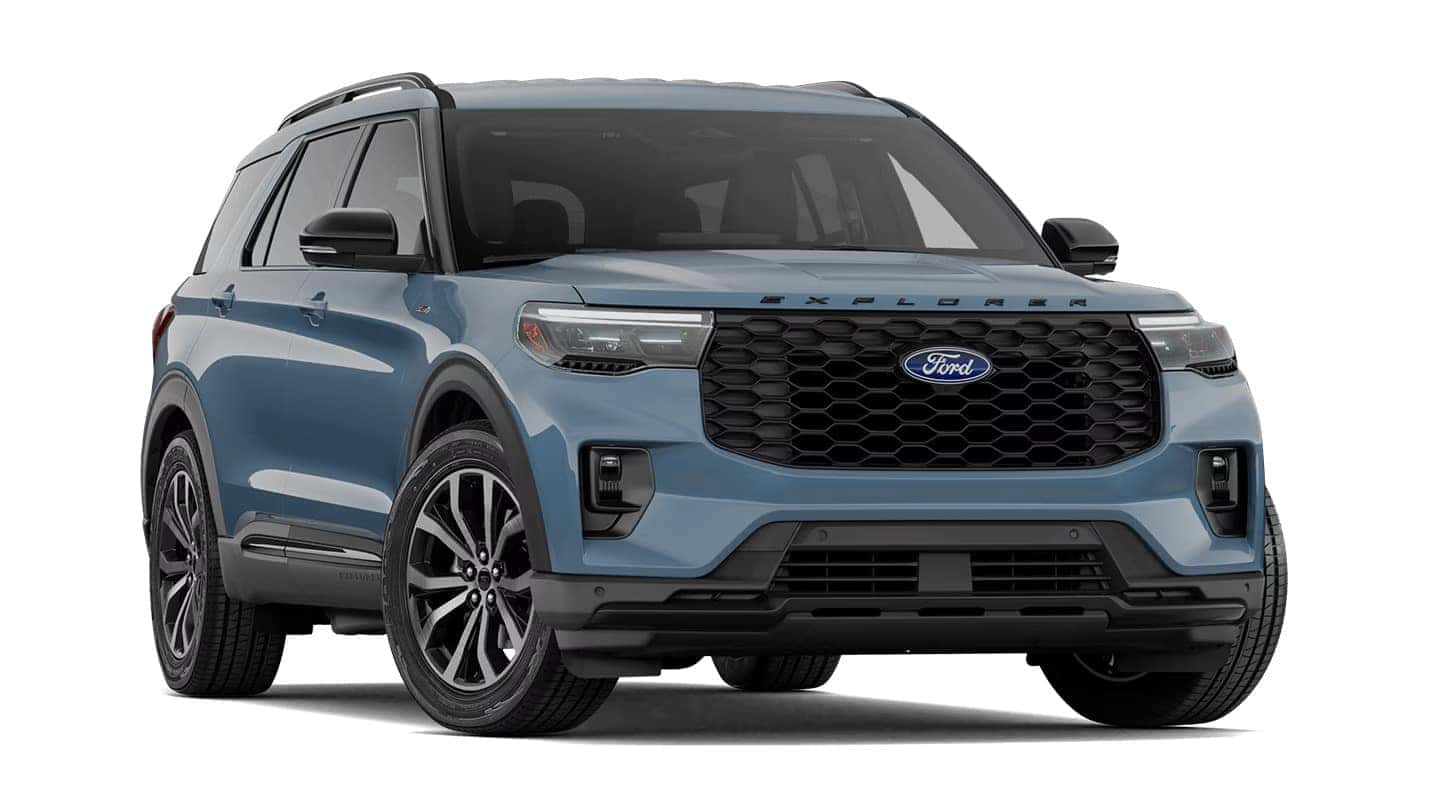
Unique cloth-trimmed seating with red stitching across the first and second rows. The ST-Line Premium Package adds rain-sensing wipers, ambient lighting, and mirror memory.
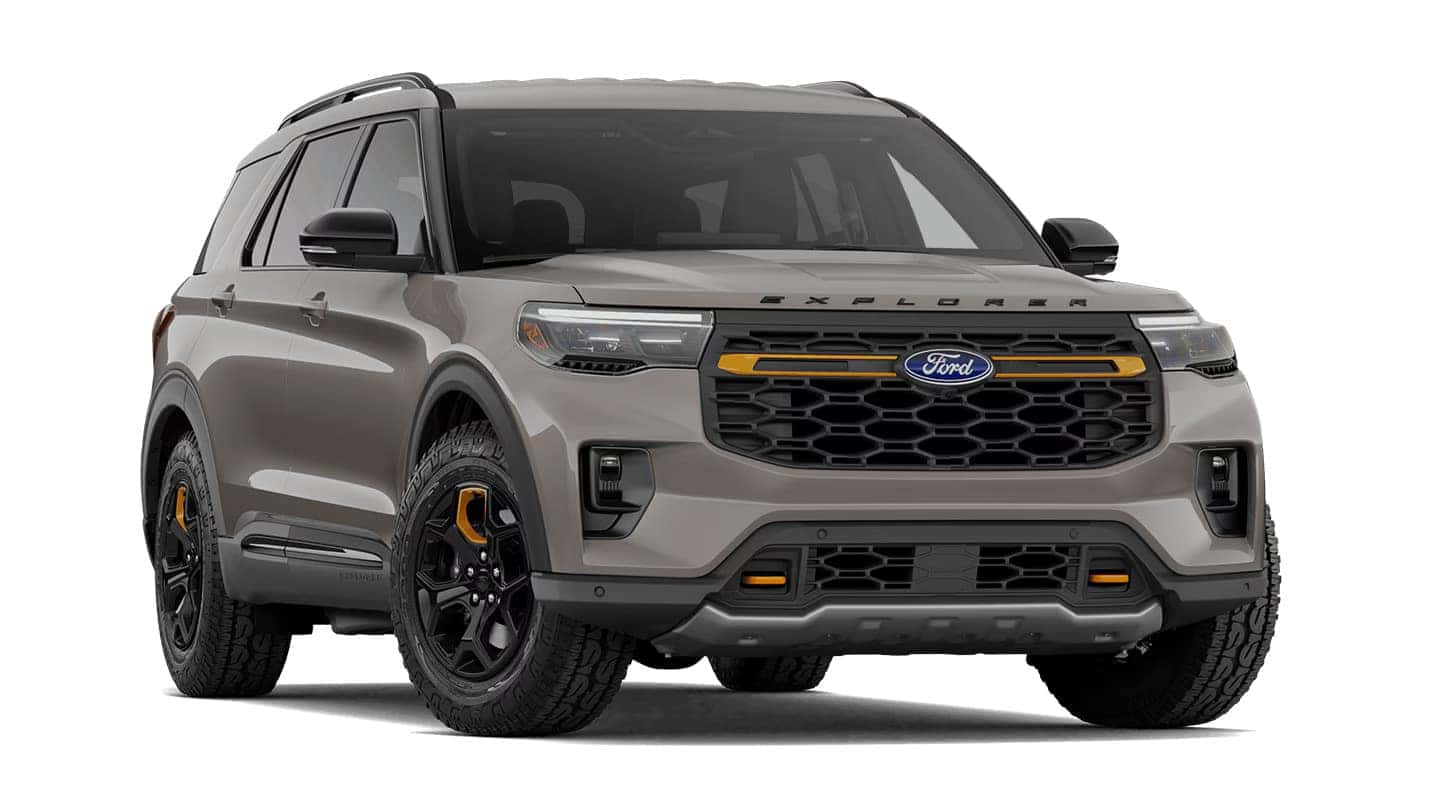
Miko suede seating surfaces with Electric Spice stitching. The Tremor Convenience Package adds PowerFold third-row seats along with ambient lighting, rain-sensing wipers, and memory driver’s seat. If third-row convenience matters to you, the Tremor Convenience Package is the most direct path to it in the lineup.
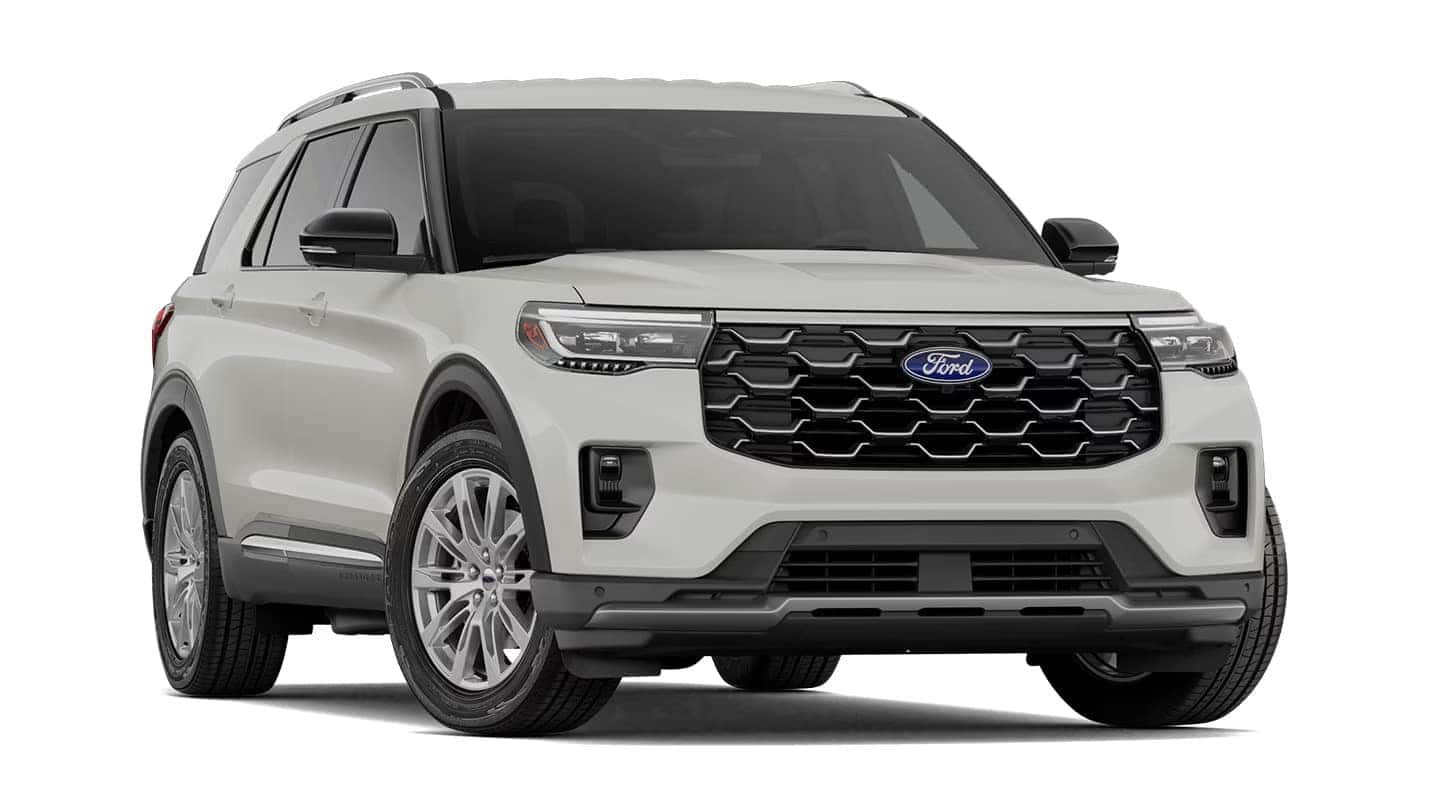
ActiveX seating with leather-interlaced diamond-perforated inserts. The Lux Leather Package adds premium leather surfaces with quilting. Cargo volume behind row one measures 85.3 cubic feet on Platinum (marginally less than the 85.8 on Active and ST-Line due to trim-specific packaging). Head room with the available panoramic Vista Roof is slightly reduced in rows one and two.
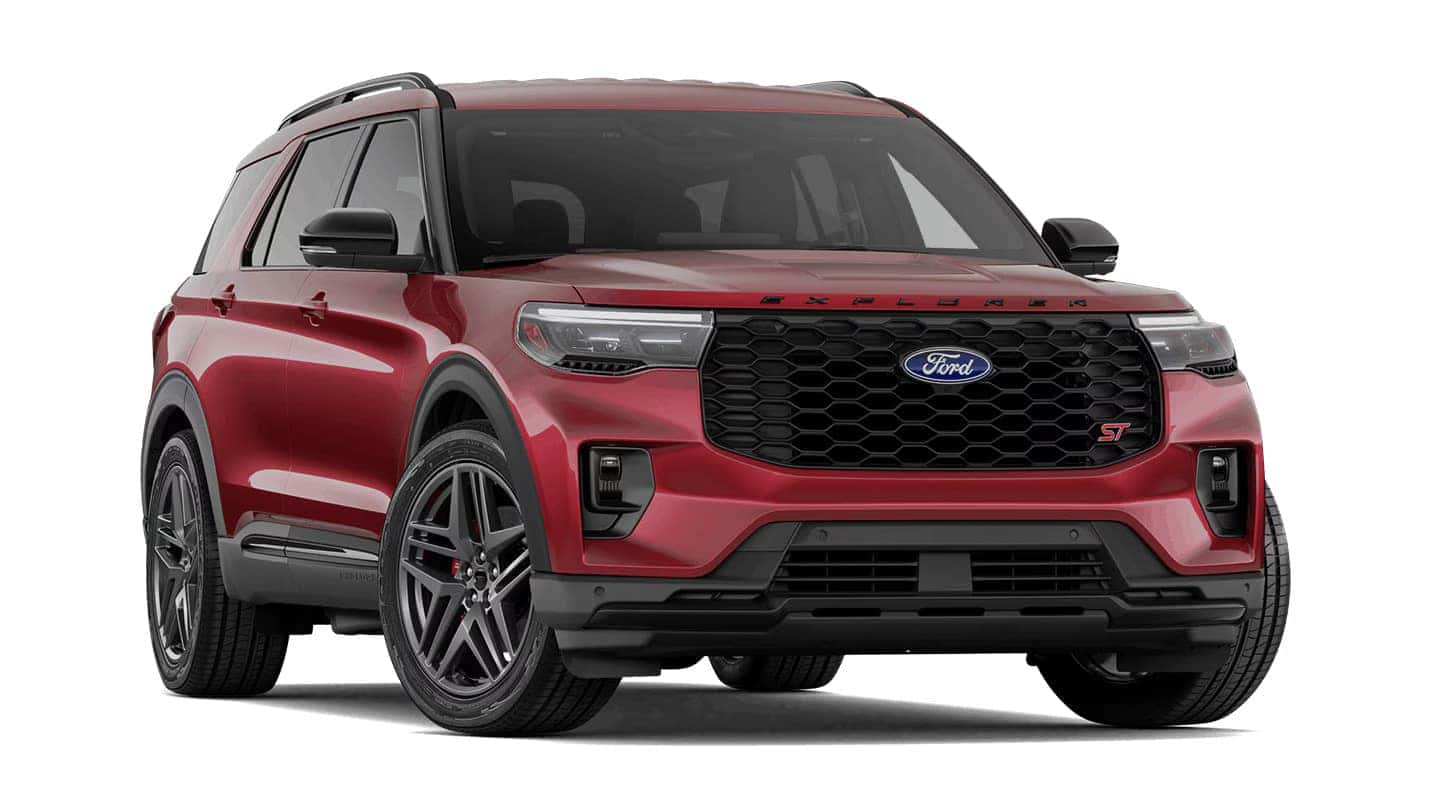
Miko suede seating with red stitching and ST badging. The 3.0L EcoBoost V6 is standard here, and the Sun and Sound Package adds the panoramic Vista Roof alongside the 14-speaker B&O audio system. Cargo volume behind row one is 85.3 cubic feet on ST.

Families in Canton, Tyler, and the surrounding area are often hauling gear for weekend lake trips, school sports, or road trips to DFW. The Explorer’s 16.3 cubic feet behind the third row is the practical baseline: it handles the stuff you need within arm’s reach of the liftgate without touching passenger seating.
On a camping trip where all seven seats are occupied, that is where your soft cooler and overnight bags live.
For school pickups where you need three rows occupied and still need to bring equipment home, the split-fold third row solves that problem without requiring anyone to move. Fold half of the third row, keep the other side up for a passenger, and slide cargo in alongside them.
The 85.8 cubic feet of maximum cargo space means the Explorer can substitute for a pickup bed on a furniture run or a Home Depot trip. That is not a common claim for a three-row SUV that also fits seven people comfortably on a Tuesday morning school run.
The available Power Points at each row mean passengers in every seat can stay charged. On a four-hour drive from East Texas to San Antonio, that matters more than any spec sheet number.
The Explorer’s three-row layout competes directly with the Toyota Highlander, Chevrolet Traverse, and Kia Telluride. Without inventing competitor specs, the Explorer’s platform switch to rear-wheel drive is specifically designed to improve both cargo packaging and driving dynamics simultaneously. Ford’s decision to offer the PowerFold third-row seats as a package upgrade rather than a top-trim-only exclusive gives buyers at the Tremor level a meaningful convenience option without moving all the way to the Platinum.
The surround-view 360-degree parking camera, standard on ST-Line and above, becomes particularly useful when the cargo area is loaded and the standard rearview is partially blocked. That camera system is also useful in tight parking situations when the vehicle is fully loaded for a long weekend. Competitors at comparable price points do not universally include surround-view as standard equipment at the same trim entry point.
The 2027 Explorer’s combination of 85.8 cubic feet of maximum cargo space and genuine seven-passenger seating is available now at Canton Ford. Whether you need the base Active for everyday family transport or the Tremor Convenience Package for PowerFold third-row seats and a more capable build, the Explorer lineup covers the range. Come in to see the cargo configurations in person, or check current inventory online and schedule a test drive at your convenience.
The 2027 Explorer seats up to seven people across three rows. A six-passenger configuration is also available on select trims.
Behind the third row, the Explorer offers 16.3 cubic feet of cargo space. With all rear seats folded, maximum cargo volume reaches 85.8 cubic feet on Active and ST-Line models, and 85.3 cubic feet on ST, Platinum, and Tremor.
PowerFold third-row seats are available on select trims through optional packages. The Tremor Convenience Package includes PowerFold third-row seats along with several other convenience upgrades.
Third-row leg room measures 31.8 inches. Third-row head room is 38.9 inches, and shoulder room in row three is 54.6 inches.
Yes. On Platinum models equipped with the available panoramic Vista Roof, first-row head room drops to 38.9 inches from 40.7 inches, and second-row head room drops to 38.2 inches from 40.5 inches. Third-row head room is not affected.
With the third row folded and the second row in place, cargo volume behind the second row is 46 cubic feet on all trim levels.
The third row’s 54.6 inches of shoulder room and 31.8 inches of leg room are workable for adults on trips of one to two hours. For extended drives, the third row is more comfortable for children or shorter adults. The first and second rows offer generous 43-inch front leg room and 37.5-inch second-row leg room for adult passengers.