The 2026 Ford Bronco Sport tows 2,700 lbs, nearly double the 2026 Subaru Forester’s 1,500-lb rating. The Forester returns slightly better fuel economy, but the Bronco Sport leads on off-road capability and tech screen size. This page compares both head-to-head so you can choose with confidence, and links to current Bronco Sport inventory at Canton Ford.
The 2026 Bronco Sport is the pick for buyers who tow, wheel on trails, or want a larger infotainment screen. The Forester earns its place for buyers who put highway fuel economy first or want access to a hybrid powertrain in a conventional crossover package. Both carry a 5-year/60,000-mile powertrain warranty and standard AWD, so the choice comes down to what you actually do with the vehicle.
| Spec | 2026 Ford Bronco Sport | 2026 Subaru Forester |
|---|---|---|
| Engine | 1.5L EcoBoost 3-cyl Turbo (most trims) / 2.0L EcoBoost 4-cyl (Badlands) | 2.5L BOXER 4-cyl |
| Horsepower | 180 hp | 180 hp |
| Torque | 200 lb-ft | 178 lb-ft |
| Transmission | 8-speed automatic | CVT |
| Drivetrain | AWD (standard) | Symmetrical AWD (standard) |
| EPA City / Hwy / Combined | 25 / 30 / 27 mpg | 26 / 33 / 29 mpg |
| Ground Clearance | 8.1 in | 8.7 in |
| Towing | 2,700 lbs | 1,500 lbs |
| Cargo (behind 2nd row) | 29.1 cu ft | 29.6 cu ft |
| Max Cargo | 65.2 cu ft | 74.4 cu ft |
| Seating | 5 | 5 |
| Basic Warranty | 3 yr / 36,000 mi | 3 yr / 36,000 mi |
| Powertrain Warranty | 5 yr / 60,000 mi | 5 yr / 60,000 mi |

Both vehicles produce 180 hp, but the Bronco Sport generates more torque at 200 lb-ft versus the Forester’s 178 lb-ft. That torque advantage comes from the turbocharger on the EcoBoost engines, and it translates directly into the Bronco Sport’s higher tow rating.
The Bronco Sport pairs that output with an 8-speed automatic transmission. The Forester uses a CVT, which suits smooth highway cruising but delivers a different feel under load. The Badlands trim of the Bronco Sport upgrades to the 2.0L EcoBoost four-cylinder, giving trail-focused buyers a stronger output option not available in the Forester lineup.
The Forester edges ahead on fuel economy with 33 mpg highway versus the Bronco Sport’s 30 mpg highway. For buyers logging long East Texas highway miles between Canton and surrounding areas, that gap may matter.
The Bronco Sport’s G.O.A.T. Modes Terrain Management System offers up to 7 selectable drive modes depending on trim. The Forester counters with X-MODE and Hill Descent Control on select trims, but the Bronco Sport’s mode count and off-road trim depth on the Badlands give it an edge for buyers who leave pavement regularly.

Behind the second row, both vehicles are nearly identical: the Bronco Sport offers 29.1 cu ft and the Forester offers 29.6 cu ft. Day-to-day hauling room is a wash.
The gap opens up at maximum cargo capacity. With the rear seats folded, the Forester stretches to 74.4 cu ft versus the Bronco Sport’s 65.2 cu ft. Buyers who regularly carry flat, bulky gear will notice that 9-plus-cubic-foot difference.
Both seat five. The Bronco Sport’s boxy silhouette, at 173.1 inches long and 70.4 inches tall, contributes to upright seating that many buyers find easier to enter and exit. The Forester’s taller ground clearance of 8.7 inches versus the Bronco Sport’s 8.1 inches means slightly more step-up height, though both remain accessible for most passengers.
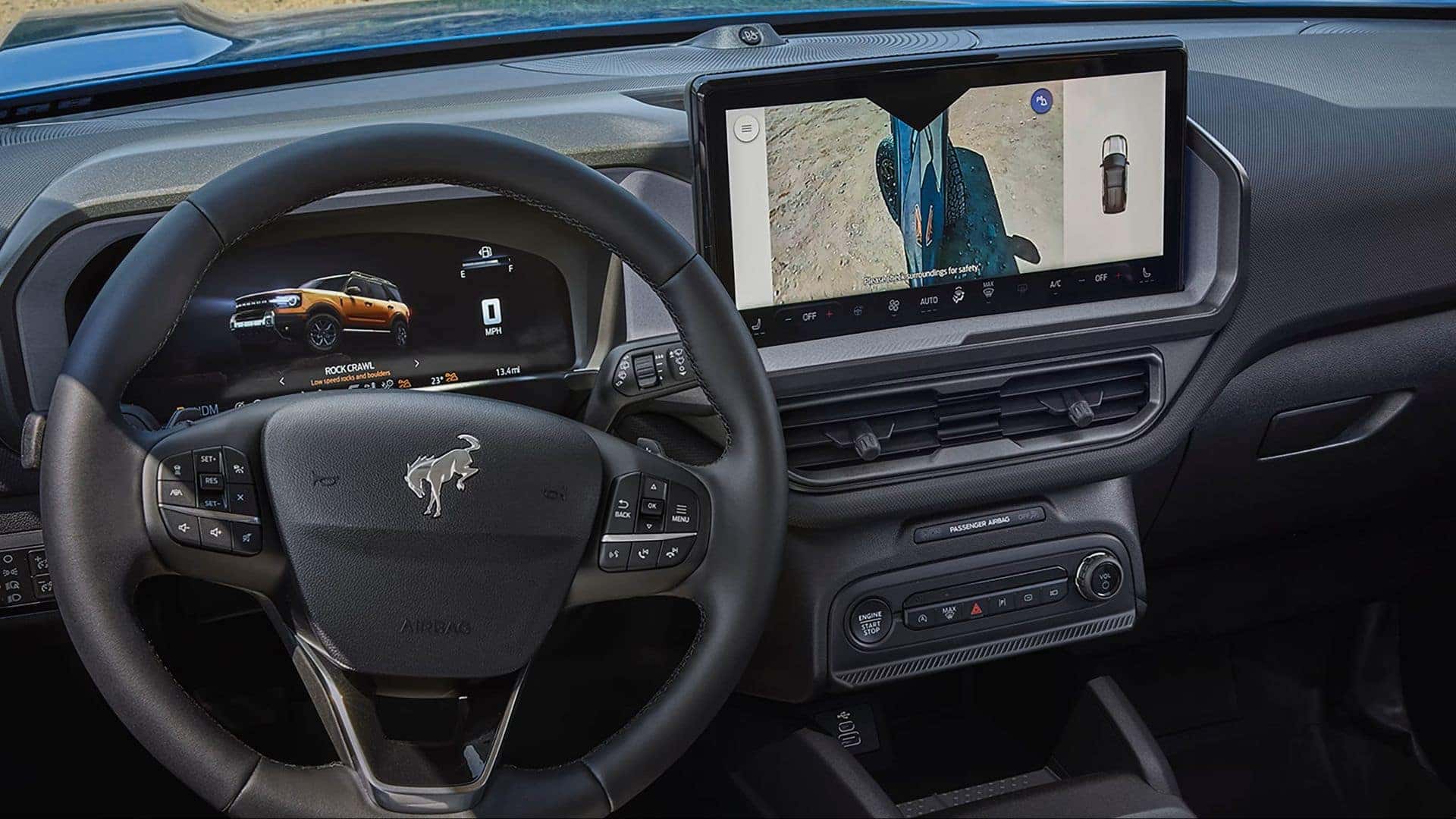
The Bronco Sport runs a 13.2-inch SYNC 4 touchscreen, the largest in this comparison. Wireless Apple CarPlay and Android Auto come standard, along with Alexa Built-In, over-the-air software updates, and a Ford Connectivity Package that includes Wi-Fi for up to 10 devices, Connected Navigation, and YouTube streaming while parked.
The Forester’s base trim uses a dual 7.0-inch setup. Premium trims and above upgrade to an 11.6-inch touchscreen with wireless Apple CarPlay and Android Auto. A Harman Kardon audio system is available on select Forester trims; the Bronco Sport counters with an available Bang and Olufsen 10-speaker system with subwoofer.
On safety, the Bronco Sport’s standard suite includes Pre-Collision Assist with AEB and Pedestrian Detection, Adaptive Cruise Control with Stop and Go, Lane-Centering Steering, BLIS with Cross-Traffic Alert, Rear Cross-Traffic Alert with Automatic Braking, Automatic High Beams, and Rear Parking Sensors. The Forester’s EyeSight system covers automatic emergency braking, lane-keeping assist, and adaptive cruise control, and adds Emergency Stop Assist and steering-responsive LED headlights at the standard level.
Both packages are thorough, and both vehicles match up well on the fundamentals. The Bronco Sport adds BLIS, rear automatic braking on cross-traffic, and 911 Assist as standard items, giving it a slight content edge.
Both vehicles share identical warranty coverage: 3 years/36,000 miles basic and 5 years/60,000 miles on the powertrain. Neither holds an advantage there.
The Bronco Sport offers four trims: Big Bend, Heritage, Outer Banks, and Badlands. The Forester offers a wider trim ladder that extends into hybrid variants. Buyers prioritizing powertrain choice breadth will find the Forester lineup wider.
The Bronco Sport’s 1,000-lb payload rating and 2,700-lb tow rating make it a functional light-duty work partner. The Forester’s 1,500-lb tow rating limits it to small trailers only.
On fuel costs, the Forester’s 29 mpg combined versus the Bronco Sport’s 27 mpg combined represents a real difference over high-mileage ownership, roughly 7 percent better efficiency on the Forester side.
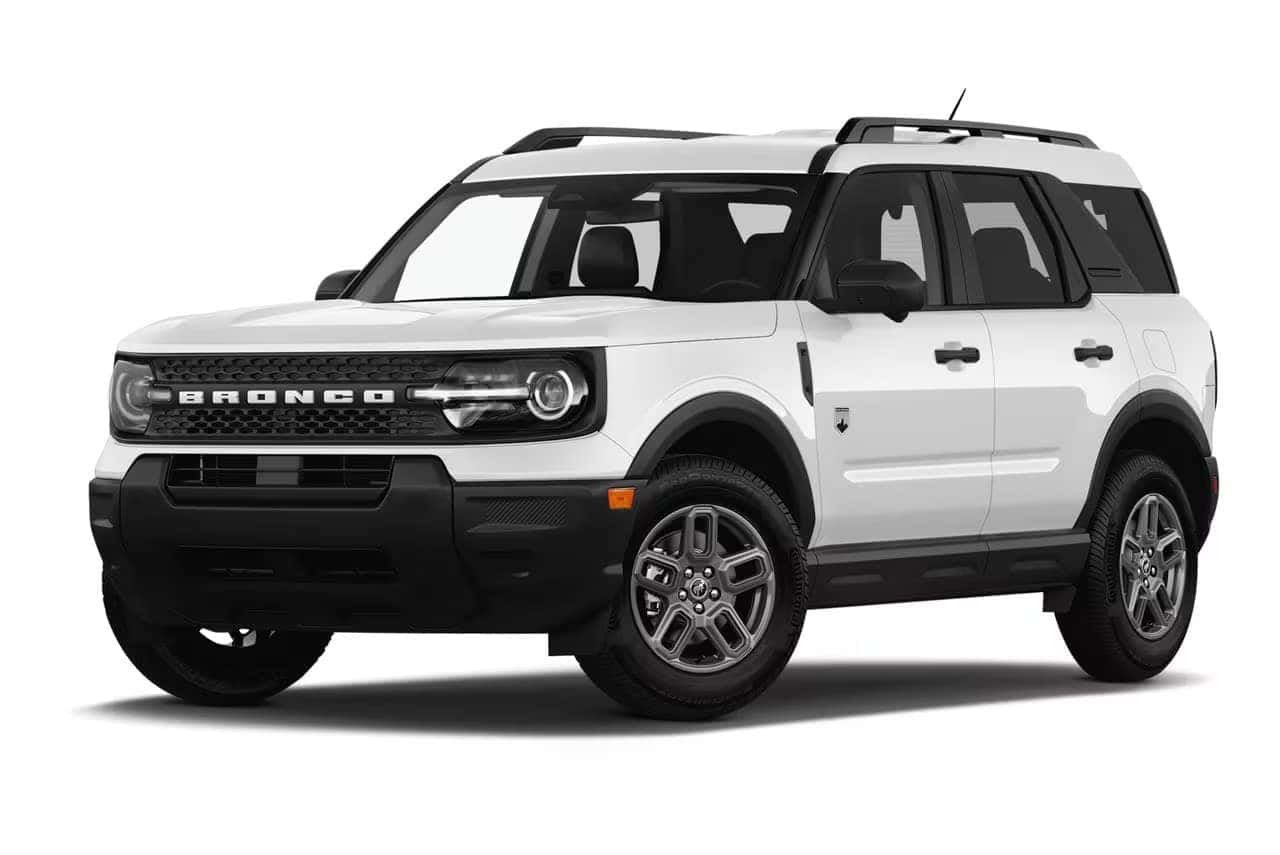
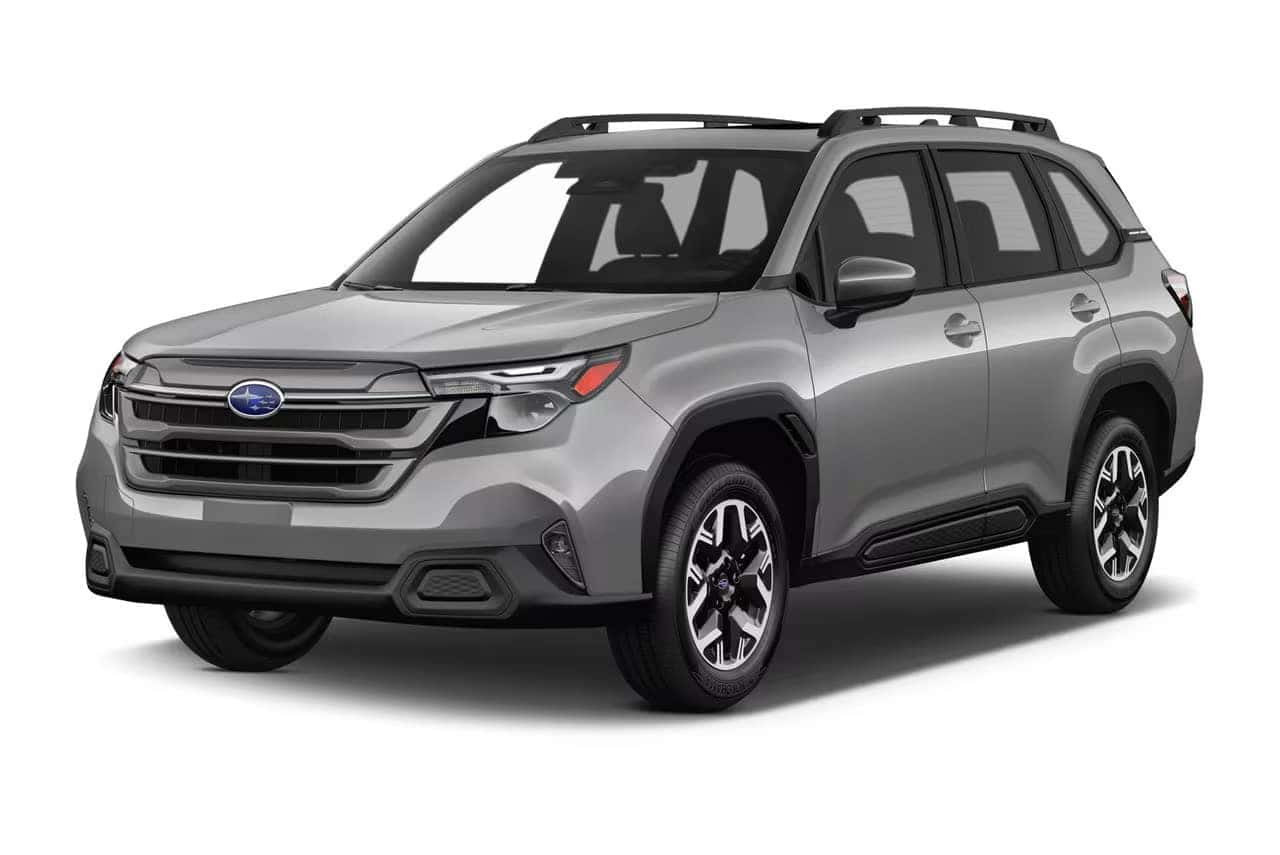
For buyers in Canton and throughout East Texas who use their compact SUV to do real work on real terrain, the Bronco Sport delivers more usable capability in a package built around that intent from the ground up.
The Bronco Sport Badlands is built differently than anything the Forester lineup offers, and the only way to feel the G.O.A.T. Modes system in action is a drive. Canton Ford carries current 2026 Bronco Sport inventory across the trim range. The team at Canton Ford can walk you through Badlands versus Outer Banks differences in person, and you can check trade value before you arrive.
Yes. The Bronco Sport tows 2,700 lbs versus the Forester’s 1,500 lbs, an 80 percent advantage in tow capacity.
The Forester gets better mileage. It rates at 26 city / 33 hwy / 29 combined compared to the Bronco Sport’s 25 city / 30 hwy / 27 combined.
Yes. The Bronco Sport comes standard with a 13.2-inch SYNC 4 touchscreen. The Forester uses a dual 7.0-inch screen on the base trim or an 11.6-inch screen on Premium and above.
Yes. Both the 2026 Bronco Sport and 2026 Subaru Forester include AWD as standard equipment on every trim.
The Forester leads with 74.4 cu ft of maximum cargo space. The Bronco Sport offers 65.2 cu ft with the rear seats folded.
Yes. The 2026 Forester is offered in hybrid variants on several trims. The Bronco Sport does not offer a hybrid powertrain for the 2026 model year.
Both match exactly: 3-year/36,000-mile basic coverage and 5-year/60,000-mile powertrain coverage. Neither holds a warranty advantage.
Yes. The Bronco Sport’s G.O.A.T. Modes Terrain Management System includes up to 7 selectable terrain modes depending on trim. The Forester offers X-MODE with Hill Descent Control on select trims.